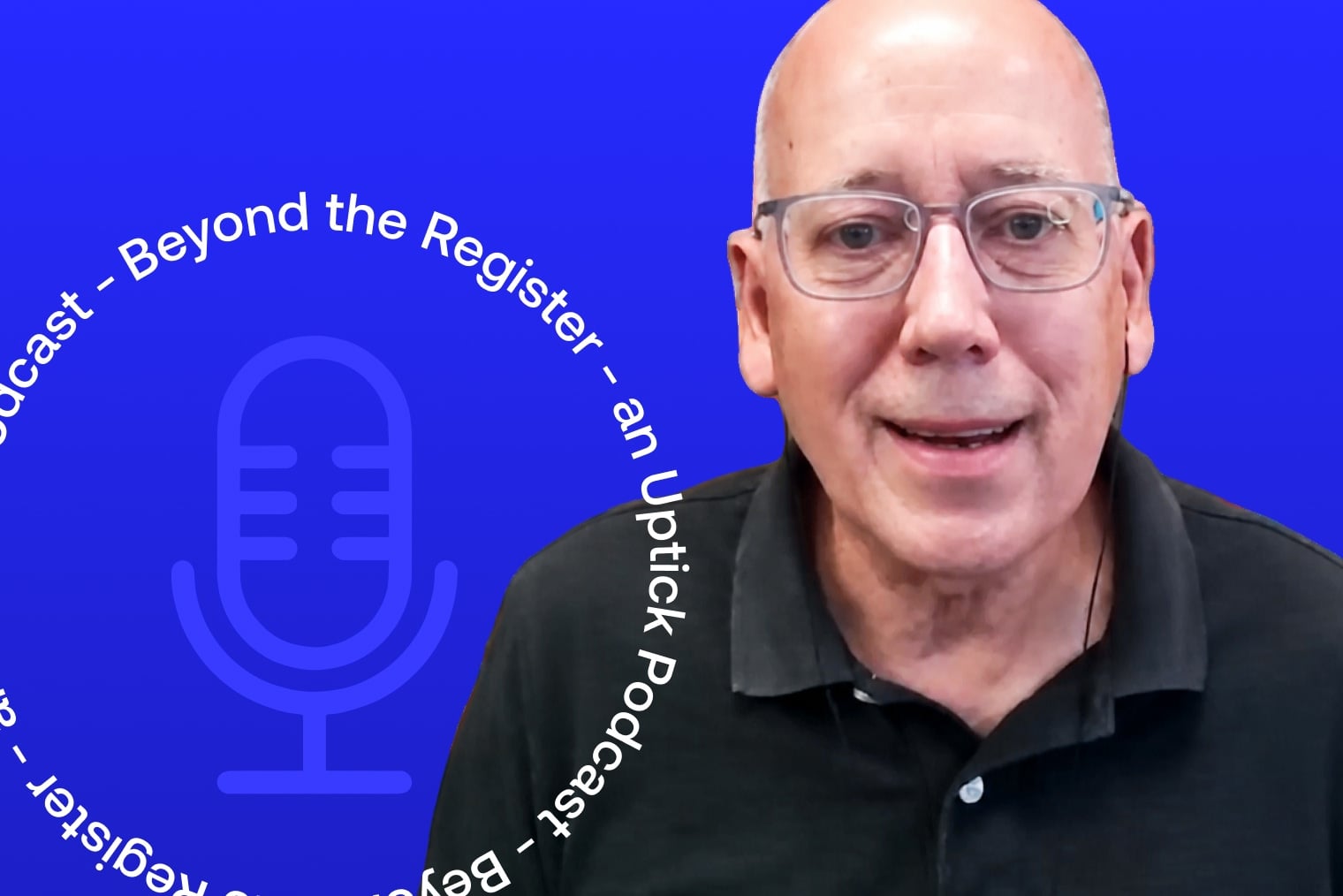
Convenience stores don't like high gas prices any more than customers do. Wait. That's counterintuitive, right? Not how Jeff Lenard explains it. When gas prices go up, margins constrict and people spend less inside the store. The real money isn't at the pump. It's in the sandwich, the snack and the coffee.
Jeff is the VP of Strategic Industry Initiatives at NACS (National Association of Convenience Stores) and one of the most quoted people on Earth when it comes to gas stations and convenience stores. He’s done more than 6,700 interviews with outlets like CNN, Fox and the BBC. If you want to understand why the corner store matters — and what small retailers can learn from an industry that runs 160 million transactions a day — Jeff is the person to talk to. And this episode of Beyond the Register is worth watching.
Why do convenience stores hate high gas prices as much as you do?
There are about 152,000 convenience stores in the United States — more than every dollar store, grocery store, drugstore, Starbucks and McDonald's combined. About 80% of them sell gas. When gas prices climb, they don't make more money.
"When prices go up, margins constrict," Jeff told me. "People are spending more on gas. They don't make any more money on gas when it's $4 instead of $3. Actually, they make less."
The bigger problem is psychological. When you're driving to work and you pass 10 to 15 gas price signs — all of them creeping up — it puts you in a bad mood. Even if you're not stopping that day, it affects how you feel about spending money. That means fewer people are coming inside to buy something.
High gas prices drive economic sentiment. They affect customer behavior in ways that go beyond the transaction at the pump. If you're in retail, you're competing on price and product, plus you're invested in how your customers feel when they walk through the door.
Why is your bathroom more important than your front door?
Jeff said something that completely reframed how I think about store layout. "The front door isn't necessarily the front door."
For convenience stores, the real front door is often the gas pump. If there's trash everywhere, are you going to go inside and buy a sandwich? Probably not. For a lot of customers, the second front door is the bathroom. About a third of people use the restroom when they stop for gas. If the bathroom is dirty, they're not sticking around.
"If they don't have the bathroom right, what makes you think they're going to have the food right?" Jeff said.
Your store layout should reflect the actual customer journey. If people are entering through the bathroom, treat it like the front door.
How did convenience stores go from desperation food to destination dining?
Forty years ago, convenience stores were mini-marts. They sold packaged goods with long shelf lives because they only got deliveries once a week, maybe once every two weeks. Over time, distribution systems improved. Stores started getting deliveries three times a week, then daily for prepared food. They hired food service managers and food safety managers. And they started competing on something other than proximity.
Today, prepared food accounts for more than 28% of in-store sales at convenience stores — up from less than 12% in 2004. The massive shift to prepared food has more than doubled in the past 20 years and it didn't happen by accident.
Jeff told me about QuikTrip, a chain in the Midwest that decided to lean into fresh food. They made bananas part of their culture. Today, each of their roughly 1,000 stores sells about 600 pounds of bananas a day. That's one banana every 66 seconds.
"People come in and they grab them," Jeff said. "And so there's the first cue that we sell fresh. And then it expands from there."
The lesson? If you want to shift customer perception, you have to commit. You can't just add a product next to your retail POS system and hope it works. You have to make it part of your identity.
What does customer leakage really mean?
Jeff introduced me to a term I hadn't heard before — customer leakage. It's not as bad as it sounds, but it's a real problem. It means customers are coming to your store and then going to a competitor within 30 minutes because they didn't find what they were looking for.
According to Jeff, about one-third of convenience store customers will visit another c-store or a fast-food restaurant within half an hour. That's a huge opportunity cost.
So how do you fix it? Jeff's advice is to sit in your store and watch. Don't ask customers what they think — they'll tell you what they think you want to hear. Just observe. Are they confused? Are they leaving empty-handed? Are your shelves too high? Is your food service area hidden?
One store owner Jeff talked to spent a week sitting on a bench, watching customers. She realized her shelving was too tall. Women in particular felt like they were in a maze. She brought the racks down and sales improved.
"Sometimes it's just like, look at what your customers are doing to figure out what you want to solve," Jeff said.
What can small retailers learn from Buc-ee’s?
If you've ever been to a Buc-ee's, you know it's an experience. It's not just a gas station — it's a destination. People drive hours out of their way to stop there. They take pictures with the beaver mascot and post about it on Instagram.
What makes it work? Consistency and experience. Buc-ee's is obsessive about clean bathrooms. If you go to a Buc-ee's with a dirty bathroom, someone is getting fired. That's the standard.
But it's not just about cleanliness. It's about creating a reason for people to stop, to slow down, to spend time there. Buc-ee's has turned the rest stop into a third place — somewhere you actually want to be.
Jeff pointed out that this isn't just for big chains. Smaller stores can do it, too. He visited a store in Tennessee called Dolly's, a partnership with Dolly Parton. It had eight places where you could take a picture and post it on social media. That's free marketing. That's word of mouth.
If you can't compete on price or scale, compete on experience. Make your store a place people want to visit, not just a place they have to stop.
What’s the one thing every retailer should do?
Jeff's advice is simple. Stand inside or outside your store and identify three things you want to solve. Not three things you want to add — three problems you want to fix.
It could be customer leakage. It could be a confusing layout. It could be that your food service area is hidden. Whatever it is, start there.
"Before you even look at what you want to find on the expo floor, before you even want to look at what sessions you want to go to, stand inside or outside of your store and say, here's three things I want to solve," Jeff said.
And here's the thing. Those problems might not be what you think they are. They might not be the leaky cooler door or the broken sign. They might be about how customers move through your space, or what they see when they walk out of the bathroom or whether they feel welcome.
The point is, you have to start with the customer's reality, not your own.
Watch your customers to see what works
Convenience stores are everywhere — more common than almost any other type of business — and they've figured out how to stay relevant in a world where everyone competes for convenience.
The lessons are universal. Know what you want to be famous for, treat every touchpoint like a front door and don't be afraid to commit to something that shifts customer perception. And most importantly, observe your customers. They'll tell you what's working and what's not. If you're willing to pay attention.
Check out this episode of Beyond the Register for more.