Running too low (or high) on stock doesn’t just mess up the back office. It hurts your bottom line, your cash flow and your customer loyalty. Retailers everywhere are struggling to find the right balance. So we decided to get to the bottom of it.
We surveyed 200 small and mid-sized retailers about their inventory experience to find out four key things: What's failing, Why it's happening, What it's costing, How they're fixing it.
The results? Eye opening. Here’s a sneak peek.
That sinking feeling when a customer makes it to the checkout counter and you have to turn them away empty handed? It happens more often than you might think. And the fallout isn’t pretty. 23% of retailers only realize an item is out of stock when a customer tries to buy it. 56% lose up to 10% of customers due to stockouts. 1 in 4 lose even more customers — permanently.
57% of retailers still rely on manual inventory counts. Many are stuck using spreadsheets, gut instinct and end-of-day guesswork, opening the door to mistakes that create a backroom mess. 31% use gut feel to forecast demand. 34% count by hand weekly or monthly. 6% use advanced tech like RFID or AI
1 in 3 retailers say their inventory doesn’t sync with their POS. And the communication breakdown is more than just inconvenient. It’s leading to inaccuracies that hurt both online and in-store sales. 32% face monthly sync issues. 21% still reconcile manually. 35% use unified inventory tools
The cost: Clogged cash flow: Too much money is trapped on the shelf.
While retailers struggle to stock enough of their hot sellers, poor inventory systems are also creating the opposite problem: too much of the wrong thing. 70% of retailers have 20-60% of their business capital tied up in inventory. With rising financing costs, every shelf that’s overstocked with low-performing products is a drain retailers can’t afford. 50% report higher inventory financing costs. 31% prioritize paying staff over suppliers when cash runs tight
Inventory issues aren’t unsolvable. In fact, retailers know exactly what they need to turn things around — and the solutions already exist. Real-time tracking (43%). Mobile access (29%). Multi-channel sync (28%).
So what’s stopping them? Cost (45%), Training (28%).
Discover what else 200 retailers revealed — and how you can use their findings to turn your own inventory chaos around.
Get the full report
This report is provided for informational purposes only and reflects data collected from a survey of 200 US based small and medium-sized retail businesses conducted in June 2025. The views and experiences of individual retailers featured in commentary or quotes are their own and do not necessarily reflect the views of Global Payments. While every effort has been made to ensure the accuracy and reliability of the information contained herein, Global Payments makes no representations or warranties as to the completeness or accuracy of the data or any conclusions drawn from it. No part of this publication may be reproduced, distributed, or transmitted in any form without prior written permission from Global Payments.
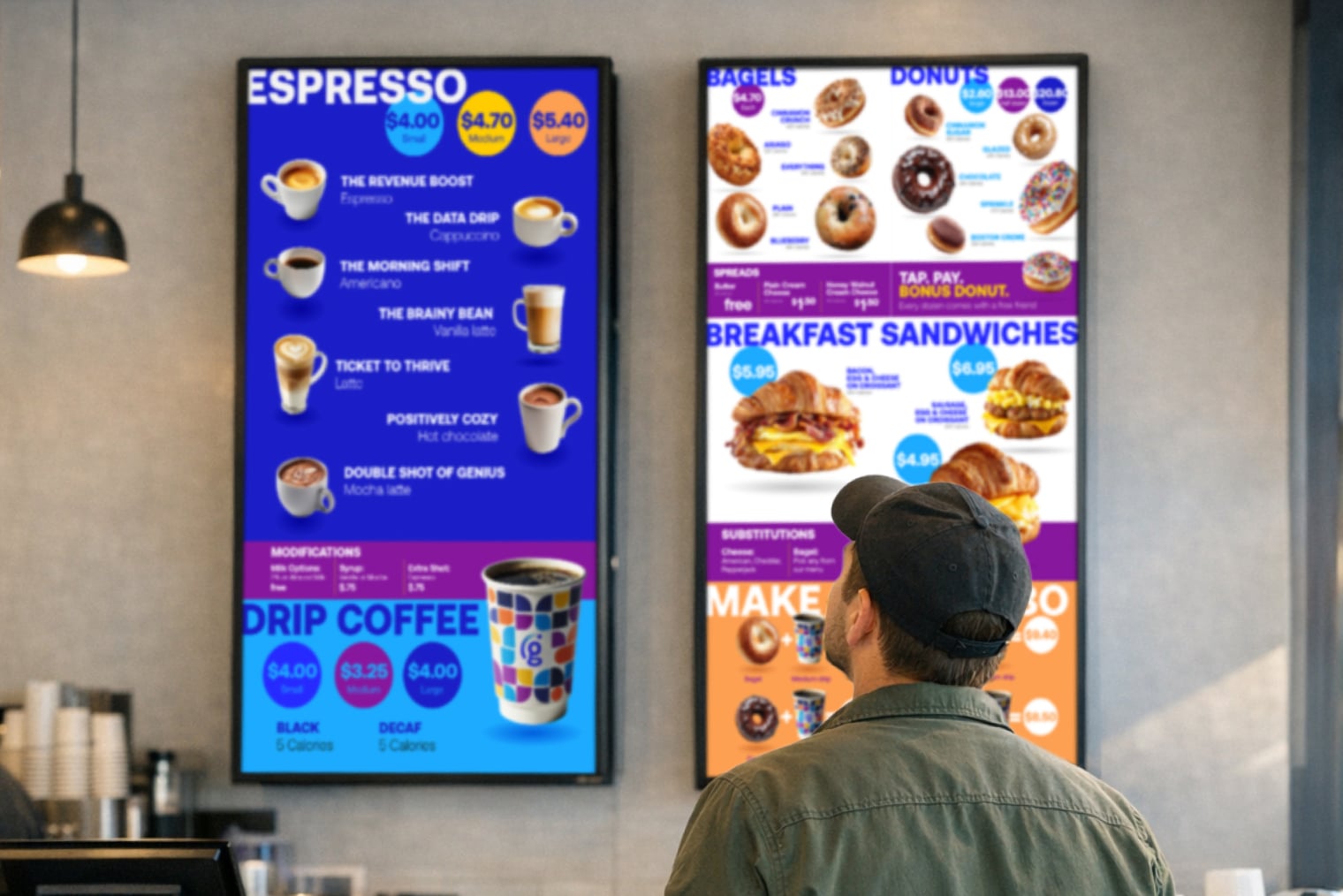
We surveyed 2,000 customers of quick-service restaurants (QSRs) across the US. The majority feel some level of stress before they even place their order — and it’s silently shrinking your average check.
default to their usual order when they feel rushed. That means safe choices and smaller baskets.
have walked away without ordering at all when the process felt rushed or unclear. Another 26% have seriously thought about it.
are extremely or very aware of the people waiting behind them in line. That awareness alone affects what they order.
More stressful than public speaking
Nearly 25% said orderi ng at a QSR is more stressful than scenarios like public speaking and airport security. Order anxiety isn't a one-off experience, but an everyday one.
The drive-thru trap
Drive thru is the channel where customers feel least in control — only 15% say it's where they make their best decisions. High volume and high stress turn out to go hand in hand.
Menu overload
Half of US consumers find large menus at least moderately overwhelming when they're trying to order fast. Cognitive overload at the counter costs you big time.
The lost upcharge
48% of US consumers say they'd customize their order more if ordering felt easier. The intent to spend more is already there. Friction is the only thing standing between you and that revenue.
The revenue gap
The order might have happened, but the upgrade didn't.
45% of US consumers say they'd try new menu items if ordering was less difficult.
Most operators are chasing new customers, but honestly? The potential revenue from existing ones is already waiting.
The question hiding in every transaction
What would your customers order if they weren't stressed?
Every transaction has a gap: what the customer
Order anxiety is a revenue problem hiding in the ordering moment. Whether they're at the counter or in the drive-thru lane, the appetite is there.
The #1 stressor in QSR ordering — and why it survives even the fastest checkout times
The most and least stressful ways to order (and the gap between them)
The behaviors that shrink basket size without showing up in your abandonment metrics
What US consumers say they'd do if ordering just felt easier
The small experience changes that directly grow revenue at the ordering moment
Disclaimer: This report is provided for informational purposes only and reflects data collected from a survey of 2,000 U.S.-based consumers conducted in March 2026. While every effort has been made to ensure the accuracy and reliability of the information contained herein, Global Payments makes no representations or warranties as to the completeness or accuracy of the data or any conclusions drawn from it.
Unsubscribe anytime. By entering your email, you agree to our privacy policy and to receive marketing emails from Global Payments.