In the past year, 92% of US consumers have made a digital payment, highlighting the need for businesses to support the seamless, secure payment options customers prefer1. But it can be challenging for businesses to deliver an optimal customer experience for all payment methods across channels and devices.
Processing issues in the form of false fraud alerts, out-of-date cards and multifactor authentication can also lead to declined transactions and prevent successful transaction completion.
How can businesses provide an outstanding customer experience while elevating their ecommerce environment? It all starts with authorization rates and authorization optimization.
The authority on authorization optimization
When a credit card or debit card is declined by the issuing bank during payment processing, it’s not always clear why it was declined or if you can resubmit and retry. Merchants typically receive standard decline codes from the customer’s bank. Payment decline reason code (PDRC) services offer detailed information on what the codes mean and the action that can be taken on a declined transaction. Acting on this information can increase authorization rates and customer satisfaction.
A high number of failed transactions can disrupt your business, just one reason you should aim to improve authorization rates, which can also help increase revenue, the checkout process and the entire customer experience.
What is an authorization rate?
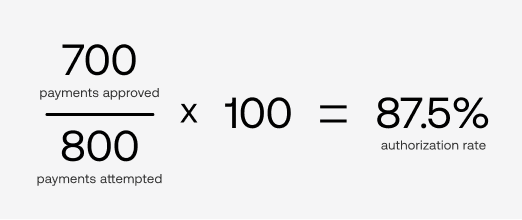
An authorization (auth) rate is the percentage of transactions that successfully pass through your payment authorization process, resulting in a completed transaction.
Having zero card-not-present (CNP) declines — or a 100% authorization rate — is nearly impossible, especially if you process a lot of payments. But closely monitoring your authorization rate can help you identify ways to reduce transaction declines.
While there is no one solution, partnering with the right payment provider — and implementing these five tips — can lead to better results in the long run.
Five key ways to improve your authorization rates
As a payment processor, you have five key ways to turn payment information into successful transactions.
1. Enable tokenization
You will improve your authorization rates by enabling tokenization. That’s when a token shields your customers’ personal payment data and card information. This substitution makes it much more difficult for an unauthorized individual to access or steal a customer’s data or interfere with a customer’s bank.
Tokenization not only adds security and reduces the chances of identity theft, but tokenized payments also have, on average, nearly 6% higher authorization rates than traditional ecommerce transactions.
2. Accept digital wallets
Some leading digital wallets, like Google Pay and Apple Pay, have tokenization built into their platforms. This fraud prevention tactic significantly reduces the risk of cybercrime, resulting in safer transactions.
But that’s not all. Digital wallets also provide a faster and more seamless payment experience, which is especially convenient for every mobile user.
3. Use card account updaters
Your payment partner should offer card account updater services. These card issuer services automatically renew expired cards and update any changes made to the card, so your customers’ information is always current.
And it can significantly reduce the number of card-not-present declines and improve your authorization rates — benefiting you and your customers alike.
4. Add security layers
Have you heard of 3DS2? It’s a multifactor authentication protocol that adds security layers beyond just basic card data. With 3DS2, additional security questions or biometrics are used to further decrease the chances of fraud, minimize friction and improve authorization rates. And if you sell to customers in Europe, it complies with the European Union’s Payment Services Directive (PSD2) and the enforcement of Strong Customer Authentication (SCA).
By implementing 3DS2, some card processors have reported an increase in authorization rates by up to 10%. This security feature is a simple but powerful way to protect your customers’ transactions. And it allows for higher authorization rates.
5. Verify the accuracy of your information
You may have heard of 3DS2. This multifactor authentication protocol, designed to prevent fraudulent transactions, adds security layers beyond just basic card data for card networks. With 3DS2, additional security questions or biometrics are used to further decrease the chances of fraud, minimize friction and improve authorization rates. And if you sell to customers in Europe, it complies with the European Union’s Payment Services Directive (PSD2) and the enforcement of Strong Customer Authentication (SCA).
By implementing 3DS2, some card processors have reported an increase in authorization ratesby up to 10%. This security feature is a simple but powerful way to protect your customers’ transactions. And it also allows for higher authorization rates.
Be sure to get as much billing information as possible from your customers. More data points contribute to a stronger and more accurate authentication process, while making it harder for unauthorized individuals to make fraudulent purchases.
Higher authorization rates means more revenue
Even slight improvements to your authorization rates can have a positive impact on your business operations: An increase as small as 1% can capture millions of dollars in additional revenue each year for a large business.
Higher acceptance rates translate into more sales, as does fewer fraudulent transactions. Tracking conversion rates and other key metrics can also help your business grow sales and revenue.
Looking for a better checkout experience?
Taking payments is foundational to your ecommerce strategy and success. With that in mind, payment processing issues and low authorization rates are frustrating for businesses of all sizes.
We help businesses worldwide analyze why payments are failing and automate a smoother transaction process while optimizing your ecommerce environment and ultimately improving the entire customer experience. Global Payments helps businesses worldwide with fraud detection, payment flow and success rates to surpass customer expectations. We proactively work with cross-border businesses to reduce declines and bolster authorization rates.
Global Payments can help your business increase payment authorization rates, integrate new payment methods, reduce routing issues and manage the payment authorization process with ease. If you are facing abandoned carts, challenges with chargebacks or customer payment issues, we can help.
Contact us today to learn how we can help you streamline payment processing and increase authorization and approval rates. Whatever your size or scale, our solutions support your ecommerce growth. Let’s get started! And visit The Uptick to stay ahead of the latest commerce and payment trends.