Most people still see restaurant jobs as something you do until you find a "real" career. But what if that narrative is wrong?
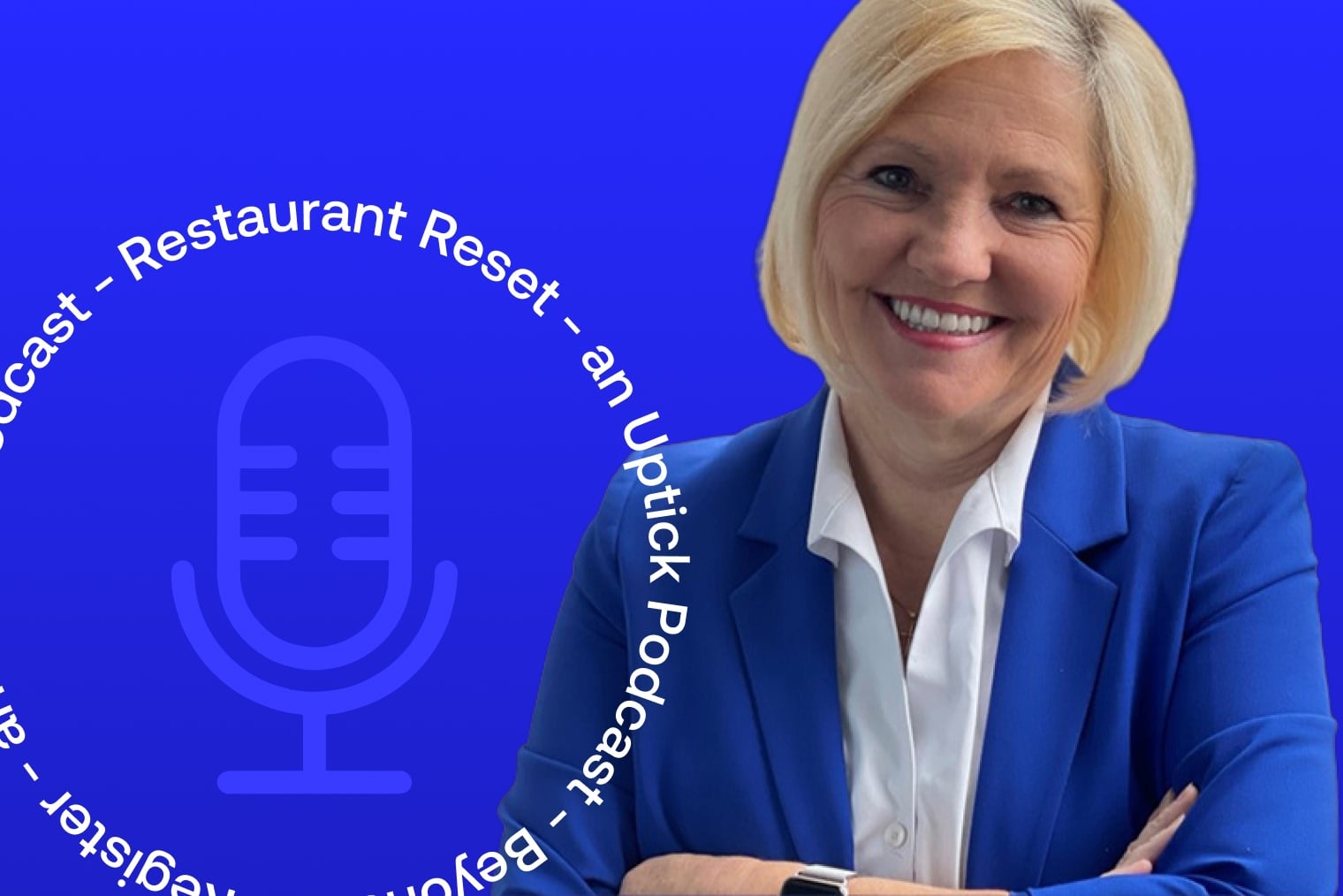
I recently sat down with Carin Stutz, whose journey is the stuff of restaurant legend. Starting behind the counter at McDonald's in the 1970s, she climbed to the C-suite at brands like Wendy's, Applebee's, Chili's and McAlister's Deli. Decades in, she's still passionate about hospitality and helping the next generation take steps toward building successful restaurants and careers.
Wondering how to turn a temporary restaurant gig into a rewarding profession — or help your team do the same? Don't miss this episode. Check out the highlights.
How can restaurant owners inspire, engage and retain their employees?
"We have a PR crisis," Carin said. "We are our own worst enemies ... and it can start right at the restaurant level." Complaining about the job to front-line workers and managers paints a bleak picture of advancement, discouraging even the most passionate employees from pursuing a future in the industry.
Watching directors walk in and start venting made Carin think twice about sticking around herself. "It's like, 'Wait. You want me to aspire to be [in] your job that you don't like?'" Makes sense, right? When people toward the top constantly broadcast misery, why would anyone want to climb the ladder?
Flipping the script starts with showing up differently. "Any time you walk into the restaurant, you've got to have your game face on," Carin said. "You've got to think about how you're going to make this a great experience for the team and for the guests." Adopting the mindset that you're there to feed people and their souls turns transactional tasks into meaningful work.
Remember, though — perception is only half of the story. Development is the other. Carin believes restaurant managers go through three stages of growth. First, they're just trying to run a great shift and get through the day. Then, they learn to lead people by hiring, scheduling and building a team. Then comes the really exciting part — they learn to manage the business, understand financials and think strategically. Laying out that career path for your employees can help them see everything — including themselves — in a new light.
When their friends are landing jobs as office managers or sales reps, they can say, "I run a $2 million business and oversee every department within my organization." I had to agree with Carin when she said, "That's so much cooler than what most people get to do."
How can restaurant operators get a better grasp of their financials?
A lot of people get into restaurants because they love hospitality, food or the energy of service. But the ones who thrive learn to speak the language of business.
"Financial statements aren't just numbers," Carin said. "They tell the story."
Don't have a good grasp on your own numbers? Start with your P&L, Carin advises — but don't try to digest the whole thing at once. Look at it in bite-sized pieces. Then, compare your P&L to numbers from last year, another location and industry standards so that you know what good looks like.
Dig into your cash flow statements, too. Proactively using resources at your disposal to improve financial literacy is key. Know the area director is coming in next week? Get familiar with food costs, inventory, tech like the restaurant POS system, what's under occupancy cost and other important line items ahead of time. Equipped with the right information, you'll find it easier to thoughtfully ask and answer questions.
"When I go in and somebody asks me something about ... the restaurant, I'm like, 'Wow, these are serious business people.' I love that ... they've taken an interest in trying to learn more."
How can owners scale successfully through franchising?
Looking to expand, restaurants often turn to franchising as a natural path to growth. To do it successfully, franchisors and franchisees have to fulfill their respective roles and work together.
In exchange for royalties and ongoing fees, franchisees expect a proven system that delivers brand awareness, operational support, quality sourcing and clear standards. Their goal should be simple — focus on running the restaurant, building a strong team and creating great guest experiences while trusting the franchisor to steward the brand.
Supporting franchisees also means understanding the economic realities they face and avoiding decisions that create undue financial burdens. Take remodels — one may look reasonable from a corporate perspective but can be difficult for operators to justify at the unit level.
Carin also shared that it's important franchisors have skin in the game. Corporate leaders come and go, but franchisees are often making what they see as a lifetime investment — something they hope to pass down to their kids. Because of that long-term perspective, franchisees deserve to be heard. While she stops short of advocating for them to have a vote on every strategic decision, she strongly supports creating formal channels like franchise advisory councils, where operators can share feedback and contribute ideas.
But there has to be give-and-take. Franchisors still have to protect brand integrity. Franchisees need to understand that not every local idea or menu suggestion is going to fit the broader customer base or long-term strategy. "The corporate marketing team brings that; [they help] keep you centered on who your customer is," Carin said.
How is the face of restaurant leadership changing?
Carin is optimistic about the future. But that optimism is rooted in the reality that climbing the career ladder is still tough for everyone — especially women. "If you were to ask me honestly ... is it easier for women to move up today? Absolutely not," she said.
Carin shared a couple of stories from her own career. After she was promoted to regional director and moved across the country to take the job, one of her new team members asked, "How do I go home and tell my wife that I've got a woman as a boss?" Another said her role was "another example of a woman taking a man's job."
But Carin is starting to see change, particularly around how women treat other women. "There used to be this idea of 'tripping the prom queen,'" Carin explained. "If one person got to a high-level position, the assumption was ... there's only room for one female." Now the question is "How do I get another one up here?" Carin believes these shifts in how women network and support each other have the potential to change the face of future restaurant leadership.
In addition to making room for more diverse perspectives, Carin believes the industry can work toward accommodating family-minded team members. "It's the nights and the weekends," she said. "That's still counterintuitive to what people describe as the family unit."
Overcoming this challenge starts with understanding it and finding ways to create balance — rotating late-night shifts, making sure assistant managers don't feel like they're working all the time and even bringing families into the restaurant so they can see what their loved ones do.
What does it take to move up in the restaurant industry?
Even though the industry still has work to do, team members can take individual steps to improve their long-term career prospects. Carin learned firsthand that it comes down to how well the people who make decisions know and value you.
She shared the story of how she contacted the chief people officer at Applebee's and said she was interested in the executive vice president role. She then told her mentor about it. His reply? "That's interesting." Carin was taken aback. It definitely wasn't the response she was looking for.
Then he said, "Who [will be] in the room when the decision is made? How many of them are going to support you?" Carin assumed that all of them would. Her mentor pushed further and asked, "In the last year, how many times have any of them come to you and said, 'I'm looking for your advice on something?' And how many times have you gone to them with that same question?"
The answer was zero and that was the problem. "I played the game with my head down, thinking I'd get great results and someone would notice," Carin said. "That's not how the game is played. Someone in that room has to be speaking on your behalf."
That lesson applies to everyone. Build relationships and demonstrate your value. Then, recruit advocates who will understand what you bring to the table before the meeting and be willing to back you when the time comes. Use your network to navigate your own career.
Four actionable steps you can take now
Carin's story is proof that restaurant jobs can become extraordinary careers, but it doesn't happen by accident. Intentionality, relationship building and the right mindset are crucial. Here's what she recommends.
Watch how you talk about your job if you are in a leadership position
Are you constantly complaining in front of your team? Are you making the work sound miserable? If so, make a change. Show up in a way that makes the work feel part of a future worth working toward.
Build your financial fluency
Start small. Learn to read a P&L, understand prime cost and compare your numbers to benchmarks. Then go deeper. Look at cash flow statements and balance sheets. Ask yourself, "If I were the CEO, what would I do with the cash?" That shift in perspective changes how you see the business and how others see you.
Use your network within your company and advocate for yourself
Don't just keep your head down and hope for the best. Build relationships with decision-makers and if you want to move up, say so.
Check out resources like the GLEAM Network
Carin co-founded this mentorship organization during COVID-19, and it's now paired more than 600 people with mentors who help them work on one big thing in their career.
They also offer a nine-week virtual bootcamp that helps hourly team members become managers and an in-person event called LEAD, where 100 emerging leaders hear from CEOs who started at the bottom and worked their way up. It's all volunteer-run and designed to make professional development accessible and affordable.
A lifelong restaurant career can begin with a single opportunity
Talking with Carin Stutz about her journey from the McDonald's counter to the C-suite reminded me why I love this industry. Yes, it's hard and the hours are brutal. Challenges remain. But it's also full of people who care deeply, work incredibly hard and have the potential to build a meaningful career.
As she put it, "I can't imagine doing anything else." After hearing her story, I can see why.
Resources mentioned
Don’t miss the next conversation
Want to learn more about the GLEAM Network or explore resources for developing your team? Check them out here. For more stories like these, subscribe to Restaurant Reset wherever you listen to podcasts.