
There’s a particular kind of pause I see when operators talk about switching restaurant tech stack systems. It’s that half-second between, “We need to modernize” and “...but not right now.”
I understand that pause. Changing tech mid-stream feels risky — like replacing the tires while the car is still moving. No one wants to risk an outage mid-service or retrain a team during a busy week.
But what our data shows is that the real danger isn’t the switch itself: It’s what happens when you delay it too long.

Stuck in place, paying the price
More than half of the restaurants we surveyed said they’ve switched or considered switching in the past 12 months.
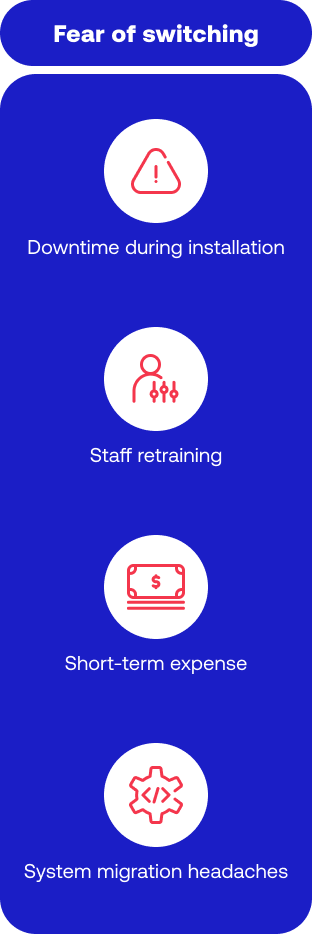
Most cited the same barriers: cost, training and downtime. Yet those same operators also reported the highest frustration with integration issues and manual processes.
In other words, they’re losing money daily to inefficiency while trying to save money by avoiding change. When margins are this thin, that math doesn’t work.
The hidden toll of “good enough”
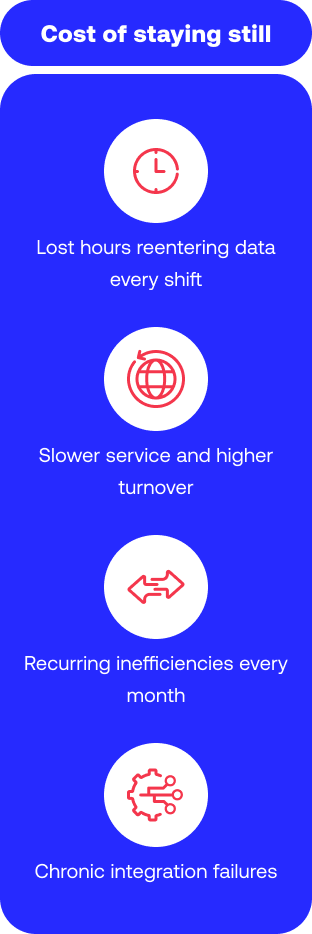
Every month a restaurant delays modernization, small inefficiencies pile up: duplicate data entry, delayed insights, staff rework and missed alerts. Each one feels minor, but over time, they quietly erode cash flow and morale.
We saw this clearly in the research. More than four in ten restaurants say their systems are only “somewhat integrated,” and nearly a third experience monthly sync issues or delayed reports as a result.
That kind of lag doesn’t just happen once. It compounds.
Downtime vs. lost time
Operators often talk about “downtime” like it’s the worst-case scenario. But in most cases, the downtime they fear is measured in hours, while the lost time from outdated systems is measured in every shift.
When data takes days to sync or reports don’t update until after close, every staffing decision, every reorder and every comp becomes a guess. That’s not downtime — that’s operational debt.

Why fear wins — and how to beat it
Change feels risky because operators are accountable for every hour and every ticket. But the truth is, the risk isn’t in moving: It’s in waiting too long to move.
Modern restaurant POS platforms are designed for phased implementation and minimal disruption. Most of the fear operators carry is based on old experiences with old systems. The reality today is faster, smoother and far more resilient.
And when the switch is done, what you gain — real-time visibility, unified data and automation — far outweighs the temporary discomfort.
What staying still really costs
Staying still feels safe until you realize what it’s costing you. The restaurants that will thrive in 2026 won’t be the ones avoiding risk. They’ll be the ones replacing outdated systems before those systems start making decisions for them.
Our latest research, Revealing what's really eating restaurant margins, shows exactly how that shift is playing out — and what operators are doing to overcome the fear of switching for good.
Our research found that 47% of operators want to switch systems — but haven’t. Here’s what that delay is costing them.
Discover how restaurants are reclaiming their margins