The cross-border payments dilemma
Cross-border ecommerce keeps growing. So does the gap between merchants who convert international shoppers and those who lose them at the final step.
The culprit is often currency. When prices appear in an unfamiliar currency, or change late in the checkout flow, shoppers hesitate. Many leave.
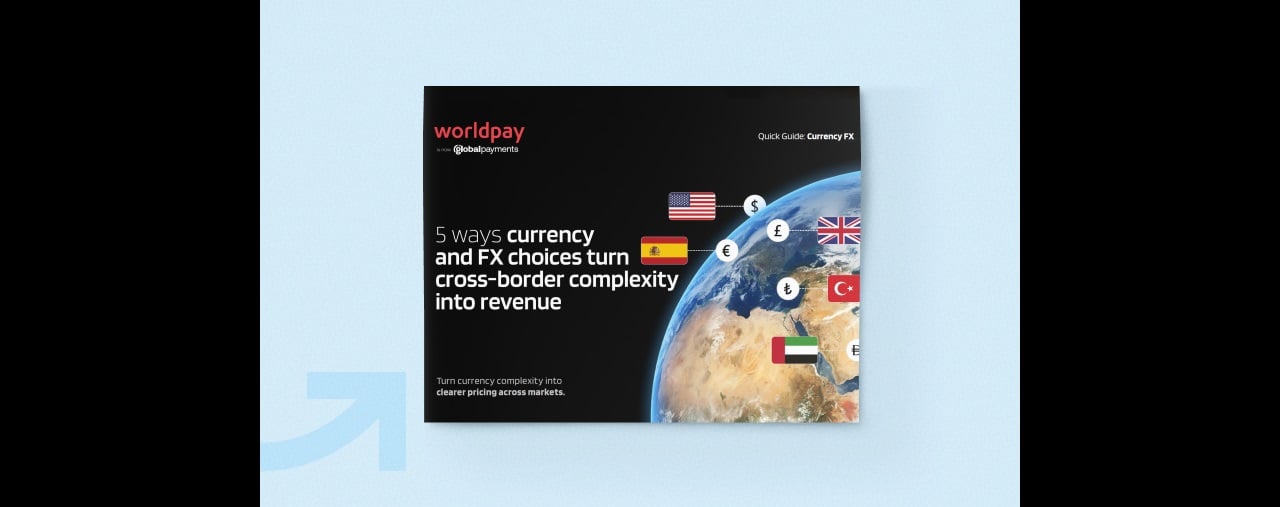
Our practical Currency FX Guide will help you close that gap by covering the tools, mechanics and implementation steps merchants need to turn cross-border complexity into margin.
The problem is bigger than it looks
Average cart abandonment rates sit at around 70%. 1 Pricing surprises and non-local currencies are a significant driver. At the same time, 82% of consumers say they would buy more if prices were displayed in their own currency, according to the Worldpay Payments Performance report. 2 The gap between those two numbers is recoverable revenue — for merchants with the right setup.
FX volatility compounds the problem. Without rate controls, a profitable international sale can become a margin surprise by the time it settles. And for finance teams still pulling rates manually, reconciliation adds cost and error before the month is even closed.
Three tools, one cross-border payments framework
The guide walks through three complementary approaches to cross-border currency management:
- Multicurrency pricing displays prices in the shopper's local currency from first click through checkout, while the merchant settles in their base currency. Global Payments supports multicurrency pricing across 145+ currencies, with configurable markups to protect margin throughout. And the new Multicurrency Pricing+ solution extends rate lock windows up to one year — useful for subscription pricing, seasonal campaigns and markets that need stronger FX risk management.
- Dynamic currency conversion works at the point of transaction. When a foreign card is detected, the shopper sees both totals — in the merchant's currency and their own — with the exchange rate shown transparently. Merchants capture incremental FX revenue on eligible transactions. Card network rules require genuine cardholder choice and clear disclosure. Our guide covers compliance considerations in detail.
- FX rate locks protect margins between sale and settlement. Global Payments offers rate locks up to 30 days for payouts and up to three days for multicurrency pricing — reducing exposure to currency swings that would otherwise hit subscription providers, high-refund-rate merchants and anyone running promotions across multiple markets.
The operational side
Currency management at scale requires more than the right tools — it requires automation. API-driven rate retrieval, quoting and reconciliation replace manual processes that consume finance team time and introduce errors. Unified reporting across currencies speeds month-end close and gives treasury teams the data they need to forecast accurately.
For marketplaces and platforms managing payouts across multiple parties and geographies, real-time payout FX rates — refreshed approximately every 30 minutes — reduce variance between projected and actual settlements.
5 practical steps to get you started
Every unclear price at checkout risks a lost sale. This resource details the full framework for getting cross-border pricing right — from first browse to final settlement. Each section covers what we do, why it matters and how to activate — making the guide useful both for merchants evaluating options and for teams ready to implement.
Here’s a sneak peek at what you’ll learn:
- Show local prices end-to-end with multicurrency pricing
- Offer currency choice at checkout with dynamic currency conversion
- Protect margins with FX rate locks
- Use real-time FX for smarter payouts
- Automate quoting, rate retrieval and reconciliation